Joint pain can make everyday life harder than it should be. Walking up stairs, exercising, gardening, getting through a workday, or simply sleeping comfortably may become difficult when a knee, shoulder, hip, or other joint is inflamed and painful. For many people, the goal is clear: reduce pain, improve function, and avoid surgery if possible.
That is why interest in regenerative medicine Houston patients often ask about has grown in recent years. Two of the most talked-about options are platelet-rich plasma, often called PRP, and stem cell therapy. Both are considered non-surgical joint pain treatment approaches that aim to support the body’s natural repair processes rather than only masking symptoms.
Still, these treatments are not the same. They differ in how they are prepared, how they may work, who may be a candidate, and what expectations are realistic. If you have been researching PRP vs stem cell therapy for joint pain, this guide explains the key differences in a clear and practical way so you can have a more informed conversation with a qualified medical professional.
Understanding Joint Pain and Why It Happens
Joint pain is a symptom, not a single diagnosis. It can develop for many reasons, including:
- Osteoarthritis and age-related wear and tear
- Overuse injuries from sports, work, or repetitive movement
- Ligament sprains and tendon problems
- Cartilage irritation or degeneration
- Inflammation after injury
- Strain caused by poor biomechanics or muscle weakness
In some cases, the pain is mainly due to inflammation. In others, there is structural damage or degeneration in the tissues surrounding the joint. The source and severity of the problem matter because not every non-surgical option is appropriate for every condition.
Many patients first try conservative care such as rest, ice, activity modification, physical therapy, anti-inflammatory medication, bracing, or corticosteroid injections. These may help, but some people continue to have pain or want to explore alternatives that go beyond short-term symptom relief.
What Is PRP Therapy?
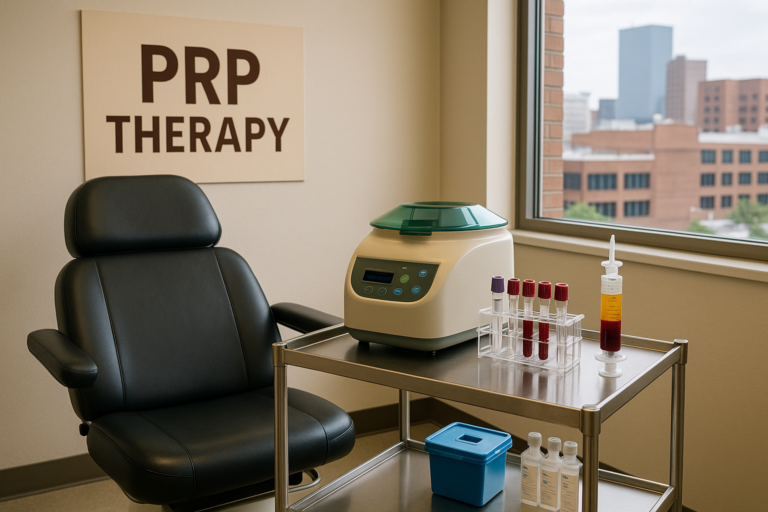
PRP stands for platelet-rich plasma. This treatment uses a sample of the patient’s own blood, which is processed to concentrate platelets. Platelets are best known for helping with clotting, but they also contain growth factors and signaling proteins involved in tissue healing and repair.
Once prepared, the platelet-rich plasma is injected into the targeted area, such as an arthritic knee, an irritated tendon, or another painful joint region. The goal is to deliver a higher concentration of the body’s natural healing components where they may be most useful.
How PRP May Help Joint Pain
PRP is generally used with the idea that concentrated platelets may support the body’s healing response. Depending on the condition being treated, this may help reduce inflammation, improve the local healing environment, and support tissue recovery.
PRP treatment for knee pain is one of the most commonly discussed uses, especially in people with mild to moderate osteoarthritis or chronic overuse-related irritation. It may also be considered for certain tendon and ligament issues around joints.
What a Typical PRP Process Involves
Although protocols vary by practice, PRP treatment often includes:
- A blood draw from the patient
- Processing the blood in a centrifuge to concentrate the platelets
- Preparing the injection
- Placing the PRP into the affected area, sometimes with image guidance for accuracy
Because PRP uses your own blood, there is no donor tissue involved. The procedure is usually performed in an outpatient setting.
What Is Stem Cell Therapy?
Stem cell therapy in regenerative medicine generally refers to the use of cells that may help support repair and regeneration in injured or degenerative tissues. In orthopedic and joint-related settings, the material is commonly obtained from the patient’s own body, often bone marrow or adipose tissue, depending on the clinical approach and applicable regulations.
These cells are discussed because they may have the ability to develop into specialized cell types or influence healing through signaling effects. In practice, the goal is usually to introduce biologically active material into a damaged area in hopes of improving the healing environment.
How Stem Cell Therapy May Help Joint Pain
Stem cell-based procedures are often considered when there is concern about more significant tissue degeneration or when a clinician believes a broader regenerative approach may be appropriate. The proposed benefit is not simply symptom suppression, but support for repair processes in a joint or surrounding soft tissue.
That said, stem cell therapy is complex. Techniques vary, patient selection matters, and results are not uniform. It is important to understand that this area continues to evolve, and not all uses have the same level of evidence behind them.
What a Typical Stem Cell Procedure May Involve
Again, methods vary, but the process may include:
- Harvesting material from the patient, such as bone marrow or adipose tissue
- Processing the material according to the treatment protocol
- Injecting the prepared material into the affected joint or tissue, often with image guidance
Compared with PRP, stem cell procedures may be more involved because they usually require a harvesting step beyond a standard blood draw.
PRP vs Stem Cell Therapy for Joint Pain: Key Differences
When comparing PRP vs stem cell therapy for joint pain, several differences stand out.
Source of the Treatment Material
PRP comes from your blood and is based on concentrated platelets. Stem cell therapy typically uses biologic material collected from sources such as bone marrow or fat tissue.
Complexity of the Procedure
PRP is generally simpler and less invasive because it starts with a blood draw. Stem cell procedures often involve tissue harvesting, which may make the overall visit more complex.
Treatment Goals
PRP is commonly used to support healing and reduce inflammation in irritated or mildly degenerative tissues. Stem cell therapy is often discussed in the context of more advanced degeneration or tissue repair goals, though candidacy depends on the diagnosis and clinical judgment.
Evidence and Clinical Use
PRP has been more widely studied for several musculoskeletal uses, including PRP treatment for knee pain in certain patients with osteoarthritis. Stem cell therapy remains an area of strong interest, but the research base can be more variable depending on the specific cell source, preparation method, and condition being treated.
Recovery Considerations
Both treatments may involve temporary soreness after the injection. However, stem cell-based procedures may involve additional recovery considerations because of the harvesting step.
When PRP May Be Considered
PRP may be an option for people who want to explore non-surgical joint pain treatment and have conditions such as:
- Mild to moderate knee osteoarthritis
- Chronic tendon irritation near a joint
- Ligament strain or incomplete healing
- Persistent pain that has not fully improved with rest and physical therapy
For example, a patient with ongoing knee discomfort during walking, squatting, or exercise may ask whether PRP treatment for knee pain could fit into a broader care plan. In the right setting, a clinician may consider PRP as part of a strategy that also includes strength training, weight management, mobility work, and activity modification.
PRP is not a magic fix, and it is not appropriate for every cause of joint pain. If a joint is severely damaged or unstable, a different approach may be more realistic.
When Stem Cell Therapy May Be Considered
Stem cell therapy may be considered for selected patients with joint pain related to degeneration or soft tissue injury when a physician believes a regenerative approach is worth discussing. This may include people who have ongoing symptoms despite conservative care and are trying to delay or avoid surgery.
For instance, someone with more complex degeneration in a joint may be interested in learning whether stem cell therapy is an option. The decision depends on imaging findings, physical exam results, medical history, and the nature of the tissue involved.
It is important to remember that “more advanced” treatment does not automatically mean “better” treatment. The best option depends on the actual problem being treated, not just the popularity of a procedure.
Benefits of Non-Surgical Joint Pain Treatment
People often search for regenerative medicine Houston providers offer because they want alternatives to invasive surgery or repeated short-term symptom management. Depending on the patient and diagnosis, potential benefits of a non-surgical joint pain treatment plan may include:
- Little to no downtime compared with surgery
- Outpatient treatment
- A focus on supporting natural healing mechanisms
- The possibility of improved comfort and function
- A more personalized care plan based on the specific joint issue
These treatments may also appeal to active adults who want to stay mobile and continue working, traveling, or exercising while exploring less invasive options.
Important Considerations Before Choosing Either Option
Choosing between PRP and stem cell therapy should involve more than comparing trend terms online. Several practical factors matter.
Your Diagnosis Matters Most
Joint pain from mild osteoarthritis is different from a major cartilage defect, chronic tendon injury, or inflammatory arthritis. The underlying diagnosis is one of the biggest factors in determining whether PRP, stem cell therapy, another injection option, or a completely different treatment path makes sense.
Severity of Degeneration
Earlier-stage problems may be approached differently than advanced joint damage. If the joint space is severely narrowed or the structure is significantly compromised, expectations for any injectable treatment should be realistic.
Overall Health and Medical History
Your health status can affect candidacy. A clinician may consider factors such as autoimmune conditions, blood disorders, infection risk, medications, prior surgeries, and how long symptoms have been present.
Rehabilitation Still Matters
Neither PRP nor stem cell therapy should be viewed in isolation. In many cases, the best outcomes are supported by a full treatment plan that may include exercise therapy, mobility work, body mechanics correction, and lifestyle changes that reduce stress on the joint.
There Are No Guaranteed Results
Response to regenerative treatments varies. Some people experience meaningful improvement, while others notice limited change. A responsible discussion should include both the potential upside and the possibility that another treatment route may ultimately be needed.
PRP and Stem Cell Therapy for Knee Pain
The knee is one of the most common joints people ask about when considering regenerative options. It handles large forces during walking, climbing, lifting, and sports, so even mild degeneration can cause persistent pain.
PRP treatment for knee pain is often discussed for patients with osteoarthritis, overuse symptoms, or chronic irritation that has not responded well enough to standard care. It may be especially appealing to patients seeking a treatment that is less invasive and uses their own blood components.
Stem cell therapy may also be discussed for knee pain, particularly in cases where degeneration is more complex or when a clinician believes a different biologic strategy should be considered. However, the best choice depends on imaging, exam findings, symptom history, age, activity level, and treatment goals.
For one person, PRP may be a reasonable first regenerative step. For another, neither PRP nor stem cell therapy may be ideal if the knee has reached a stage where surgical consultation is more appropriate. Good care starts with matching the treatment to the problem.
Questions to Think About During a Consultation
If you are weighing PRP vs stem cell therapy for joint pain, a consultation should help clarify not only what each treatment is, but also why one might be recommended over another. It can be helpful to think through issues such as:
- What specific structure is causing the pain?
- How advanced is the degeneration or injury?
- What conservative treatments have already been tried?
- What is the goal: pain reduction, better mobility, improved activity tolerance, or delaying surgery?
- What is the expected recovery process?
- What role will rehabilitation play after the procedure?
These are practical questions that can lead to a more individualized treatment plan rather than a one-size-fits-all decision.
Why Personalized Evaluation Is Essential
Regenerative medicine is not simply about choosing the newest procedure. It is about selecting the right patient, the right diagnosis, and the right timing. A thorough evaluation may include a physical exam, review of prior treatments, imaging when appropriate, and discussion of your day-to-day limitations.
For example, two patients may both say they have knee pain, but one may have mostly inflammatory irritation with preserved joint function, while the other may have advanced structural wear. Their treatment paths could be very different. This is why generalized online comparisons only go so far. Personalized clinical judgment matters.
Making an Informed Choice
If you are considering non-surgical joint pain treatment, PRP and stem cell therapy are both worth understanding, but they should not be viewed as interchangeable. PRP is typically simpler, uses concentrated platelets from your own blood, and is commonly discussed for issues such as mild to moderate osteoarthritis and chronic soft tissue irritation. Stem cell therapy is more complex, often involves harvesting biologic material from your body, and may be considered in selected cases where a broader regenerative approach is being explored.
The right option depends on the source of your pain, the condition of the joint, your overall health, and your treatment goals. In some cases, PRP may be a practical starting point. In others, stem cell therapy may be part of the discussion. And in some situations, the best answer may be a different conservative therapy or referral for surgical evaluation.
Conclusion
Comparing PRP vs stem cell therapy for joint pain is about more than deciding which treatment sounds more advanced. It is about understanding how each approach works, what type of joint problem it may address, and whether it fits into a realistic, personalized care plan. For people exploring regenerative medicine Houston options or looking for a non-surgical joint pain treatment, informed decision-making starts with an accurate diagnosis and clear expectations.
Both PRP and stem cell therapy aim to support the body’s healing response, but they differ in procedure, complexity, and typical use. Whether you are researching PRP treatment for knee pain or broader regenerative options for another joint, the most important step is a careful medical evaluation that looks at the whole picture, not just the procedure itself.