Knee arthritis can make everyday life harder than many people expect. Walking through the grocery store, getting up from a chair, climbing stairs, or enjoying a favorite activity may become painful and frustrating over time. For adults looking for options beyond medications, repeated cortisone injections, or surgery, interest in regenerative and non-operative treatments has grown. One treatment that often comes up is platelet-rich plasma, commonly called PRP.
If you are researching PRP for knee arthritis Houston TX, it helps to understand what PRP is, who may be a good fit for this approach, and where its limits may be. While PRP is not a cure for arthritis and is not right for everyone, it may be considered as part of a broader non-surgical knee arthritis treatment Houston TX plan in selected patients. This article offers general educational information to help you have a more informed conversation with a qualified clinician.
Understanding knee arthritis
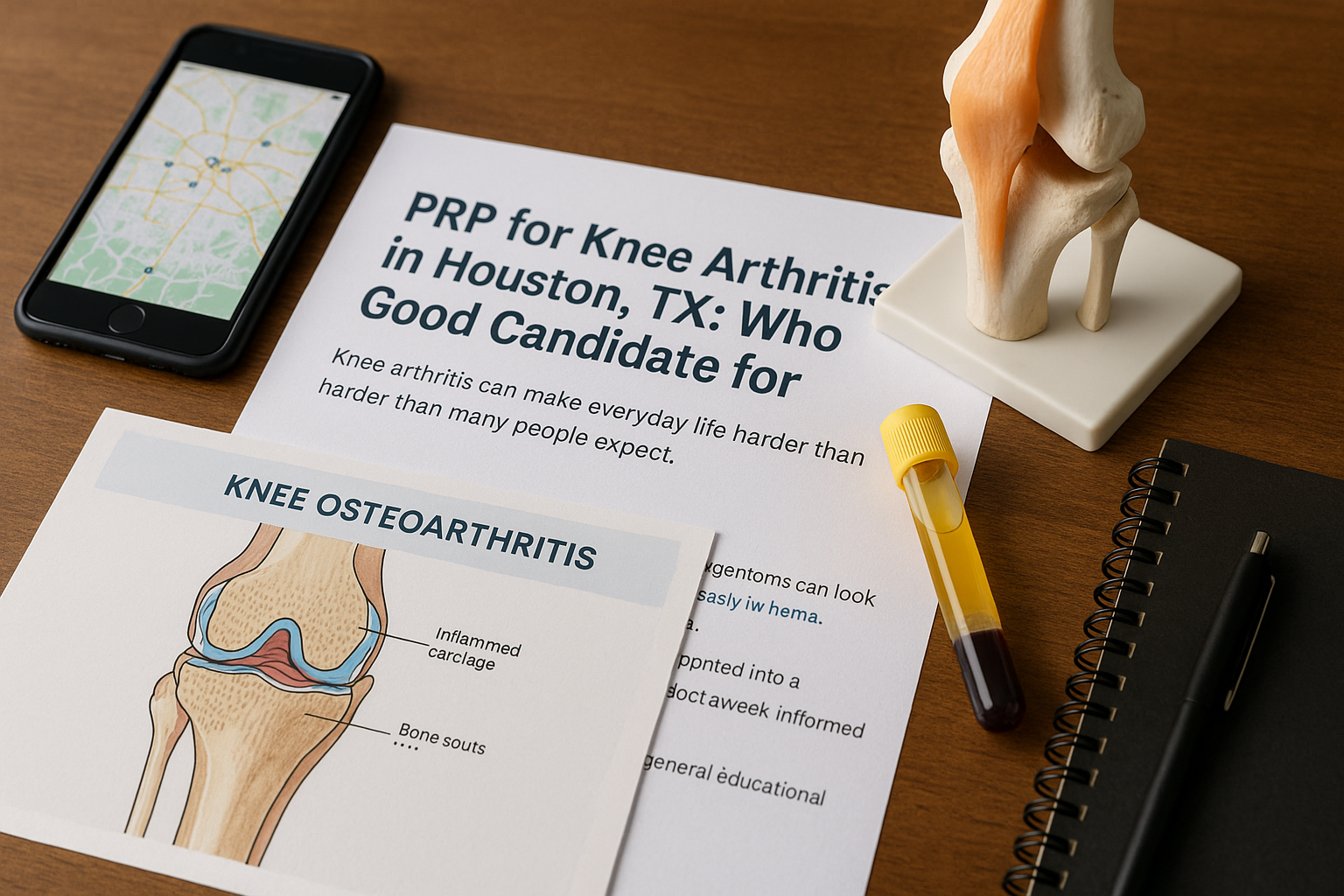
Knee arthritis usually refers to osteoarthritis, a degenerative joint condition in which the cartilage that cushions the knee gradually wears down. As the joint changes, people may develop pain, stiffness, swelling, reduced flexibility, grinding sensations, and difficulty with weight-bearing activity.
Common factors associated with knee osteoarthritis include:
- Age-related joint wear
- Prior knee injury
- Excess body weight
- Repetitive joint stress
- Family history
- Weakness or poor joint mechanics
Symptoms can range from mild morning stiffness to more persistent pain that interferes with work, exercise, sleep, or daily mobility. Some people have intermittent flare-ups, while others notice a gradual decline over years.
Because knee arthritis exists on a spectrum, treatment is rarely one-size-fits-all. A person with mild cartilage wear and occasional swelling may be managed very differently from someone with severe bone-on-bone arthritis and marked loss of motion.
What is PRP and how is it used for knee pain?
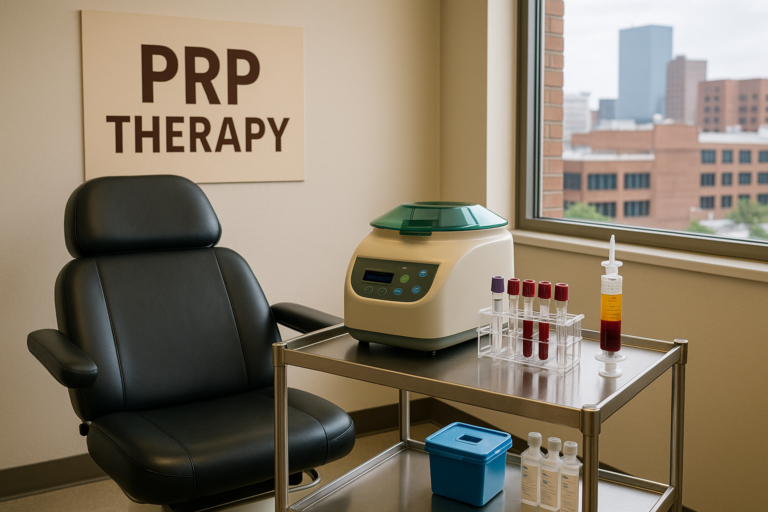
Platelet-rich plasma is made from a sample of the patient’s own blood. The blood is processed to concentrate platelets, which contain growth factors and signaling proteins involved in tissue repair and healing responses. The prepared PRP is then injected into the affected area, such as the knee joint.
When people search for platelet rich plasma knee pain Houston TX, they are usually looking for a treatment that may help reduce pain and improve function without surgery. The goal of PRP in knee osteoarthritis is not to regrow a brand-new joint. Instead, it may help support a more favorable healing environment within the joint and potentially reduce inflammation-related symptoms in appropriate candidates.
PRP protocols can vary by practice. A clinician may evaluate symptoms, review imaging, examine the joint, and determine whether PRP knee injections Houston TX make sense based on the individual’s condition, medical history, and prior response to conservative care.
Who may be a good candidate for PRP for knee arthritis?
PRP tends to be discussed most often for adults with knee osteoarthritis who want to explore non-surgical care before considering joint replacement or who are not ready for more invasive treatment. Good candidacy depends on the whole clinical picture, not just interest in the procedure.
People with mild to moderate knee osteoarthritis
In general, PRP is often considered more promising for people with mild to moderate degenerative change than for those with very advanced arthritis. If there is still some preserved joint space and the main goals are reducing pain, improving function, and staying active, PRP may be part of the discussion.

That does not mean advanced arthritis automatically rules it out, but expectations must be realistic. When the joint is severely damaged, non-surgical treatments may offer more limited relief.
People with persistent symptoms despite standard conservative care
Many candidates have already tried basic treatments such as:
- Activity modification
- Physical therapy or home exercise
- Weight management efforts
- Bracing or supportive footwear
- Ice or heat
- Oral or topical pain-relieving medications, when appropriate
If symptoms continue despite these steps, PRP may be explored as a next-level conservative option within a broader non-surgical knee arthritis treatment Houston TX strategy.
People seeking to delay or avoid surgery
Some individuals are trying to remain active while postponing surgery. Others may not yet meet the threshold for knee replacement, or they may prefer to exhaust less invasive options first. PRP can appeal to patients looking for a procedure that uses their own blood product rather than an implanted device or major operation.
People with realistic expectations
A strong candidate understands that PRP is not an instant fix. Improvement, if it occurs, may take time. Results can vary, and some people notice meaningful symptom relief while others have a less dramatic response. The best candidates are often those who see PRP as one part of a comprehensive plan rather than a stand-alone miracle treatment.
People willing to support the knee with healthy habits
Joint injections work best when paired with good overall joint care. Patients who are committed to strengthening the muscles around the knee, improving mobility, avoiding overload, and following post-procedure instructions may be better positioned to benefit.
Important factors a clinician may review before recommending PRP
Before recommending PRP for knee arthritis Houston TX, a clinician will typically look at more than just knee pain. Several factors can influence whether this option is appropriate.
Severity of arthritis
Physical examination findings and imaging studies such as X-rays can help clarify whether the arthritis is early, moderate, or advanced. This matters because treatment goals and likely response may differ depending on the degree of structural change.
Type of symptoms
PRP may be considered when pain appears related to osteoarthritis, inflammation, or chronic degenerative change. However, a knee can hurt for many reasons. Meniscal tears, ligament injury, referred pain from the hip or back, inflammatory arthritis, and infection require different evaluation and management.
Overall health and medical history
A clinician may ask about blood disorders, active infection, certain medications, autoimmune disease, cancer history, or other conditions that could affect procedure planning or whether PRP is advisable. Because PRP is derived from the patient’s own blood, preparation and use still require individualized medical judgment.
Current medications
Some medications can affect bleeding, platelet function, or the inflammatory response. Patients should always disclose prescription medicines, over-the-counter drugs, and supplements before any procedure.
Prior treatment history
What has already been tried matters. Some patients have had good but temporary relief from standard treatments and want a longer-lasting non-surgical option. Others may have exhausted multiple therapies without meaningful improvement, which may change the conversation about likely next steps.
Who may not be the best candidate?
PRP is not ideal for every person with knee pain. In some situations, another treatment path may be more appropriate.
A clinician may be cautious about PRP or recommend alternatives if a patient has:
- Very advanced bone-on-bone arthritis with major functional limitation
- Active infection or skin infection near the injection site
- Certain blood or platelet disorders
- Unexplained knee swelling that has not been properly evaluated
- Inflammatory arthritis requiring different medical management
- A recent fracture or significant structural injury needing other treatment
PRP may also be a poor fit when someone expects a guaranteed outcome or plans to continue activities that repeatedly overload the joint without addressing underlying mechanics, strength, or weight-bearing stress.
How PRP compares with other non-surgical knee arthritis treatments
There is no single best option for everyone. Treatment choice depends on symptom severity, function, goals, imaging findings, medical history, and personal preferences. The table below gives a general comparison of commonly discussed non-surgical approaches.
| Treatment | Main Purpose | Potential Advantages | Important Considerations |
|---|---|---|---|
| Physical therapy and exercise | Improve strength, mobility, and joint mechanics | Foundational, non-invasive, supports long-term function | Requires consistency and may take time to show results |
| Oral or topical medications | Reduce pain and inflammation | Accessible and often useful for flare management | May have side effects or medication limitations |
| Corticosteroid injection | Short-term inflammation and pain relief | Can help calm painful flare-ups | Relief may be temporary; repeat use may not be ideal for all patients |
| Hyaluronic acid injection | Improve joint lubrication in selected cases | May help some patients with arthritis symptoms | Response varies and not all patients benefit |
| PRP injection | Support symptom relief using concentrated platelets from the patient’s blood | Uses autologous blood product and may fit a regenerative care plan | Not a cure; results vary; candidacy and expectations matter |
Potential benefits of PRP for knee arthritis
Patients interested in PRP knee injections Houston TX are often looking for benefits such as reduced pain, better daily function, and the possibility of staying active without surgery. Depending on the individual case, potential benefits may include:
- Less knee discomfort during daily movement
- Improved tolerance for walking, stairs, or exercise
- Reduced stiffness
- A non-surgical treatment option that uses the patient’s own blood product
- A possible complement to rehabilitation and long-term joint management
Still, it is important to stay balanced. PRP is better viewed as a tool that may help certain patients, not as a guaranteed replacement for comprehensive arthritis care.
What to expect from the evaluation process
Anyone considering platelet rich plasma knee pain Houston TX treatment should expect a thoughtful evaluation rather than a quick sales pitch. A proper assessment often includes:
- Review of symptoms and how long they have been present
- Discussion of activity limits and personal goals
- Physical examination of the knee
- Review of prior treatments and responses
- Imaging review when appropriate
- Discussion of risks, benefits, alternatives, and expected timeline

This step matters because not all knee pain is arthritis, and not all arthritis-related pain responds the same way. An individualized assessment can help identify whether PRP fits into the treatment plan or whether another option should come first.
Practical examples of who may consider PRP
Sometimes candidacy is easier to understand with real-world scenarios.
Example 1: Active adult with early arthritis
A person in their 50s notices increasing knee pain during walks and workouts. X-rays show mild osteoarthritis. They have already tried exercise modifications, anti-inflammatory measures, and strengthening work, but they still have recurring pain. This person may be a reasonable candidate to discuss PRP as part of a conservative strategy.
Example 2: Busy professional with moderate arthritis
A patient in their 60s has moderate stiffness, swelling after activity, and pain when standing from a chair or climbing stairs. They want to remain mobile and are not ready to consider knee replacement. If no major contraindications are present, PRP may be worth evaluating as one option in a broader non-operative plan.
Example 3: Severe structural degeneration
A patient has severe bone-on-bone arthritis, major deformity, frequent nighttime pain, and substantial loss of function. In this setting, PRP may provide limited benefit, and the conversation may shift more toward advanced pain management or surgical consultation, depending on the individual’s health and goals.
Important limitations and realistic expectations
One of the most important parts of discussing non-surgical knee arthritis treatment Houston TX is understanding limitations. PRP does not reverse every arthritic change in the knee. It may reduce symptoms in some patients, but it does not eliminate the underlying wear process.
Results may depend on:
- The severity of arthritis
- The presence of swelling or inflammation
- Body weight and activity demands
- Strength and movement quality
- Coexisting injuries or joint instability
- General health factors
Recovery and response time also vary. Some people feel better gradually over weeks to months. Others may not notice enough improvement to justify repeating the treatment. This is why a frank discussion with a qualified clinician is essential before proceeding.
When knee pain needs prompt medical attention
Not all knee pain should be handled as routine arthritis. Seek prompt medical evaluation if you have:
- Sudden inability to bear weight
- A severely swollen knee that develops quickly
- Redness, warmth, and fever
- Significant trauma or suspected fracture
- A locked knee that cannot straighten
- Calf swelling, chest pain, or shortness of breath
These symptoms may point to problems such as infection, acute injury, a blood clot, or another urgent condition. General educational content should never replace timely medical care.
Making an informed decision in Houston, TX
If you are exploring PRP for knee arthritis Houston TX, the most useful next step is not simply finding a procedure but getting a clear diagnosis and a personalized care plan. A well-informed decision should weigh the degree of arthritis, prior treatment response, day-to-day limitations, activity goals, and whether expectations match what PRP can realistically offer.
For some adults, PRP may be a reasonable non-surgical option to consider when knee arthritis is causing ongoing pain despite conservative treatment. It may be especially relevant for people with mild to moderate osteoarthritis who want to stay active, reduce symptoms, and delay more invasive treatment if appropriate. For others, especially those with advanced structural damage or a different cause of knee pain, another path may make more sense.
The key is individualized evaluation. Knee arthritis management works best when treatment is selected for the person, not the trend. Whether PRP becomes part of your plan or not, a qualified clinician can help you understand your options and build a strategy that supports function, mobility, and quality of life.
As with any medical decision, use this information as general education only. For diagnosis, treatment recommendations, and guidance on whether PRP is suitable for your specific situation, consult a licensed healthcare professional.