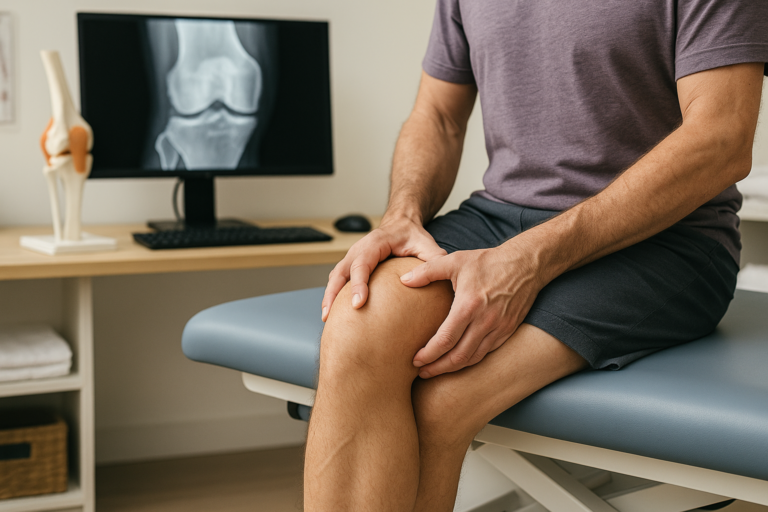
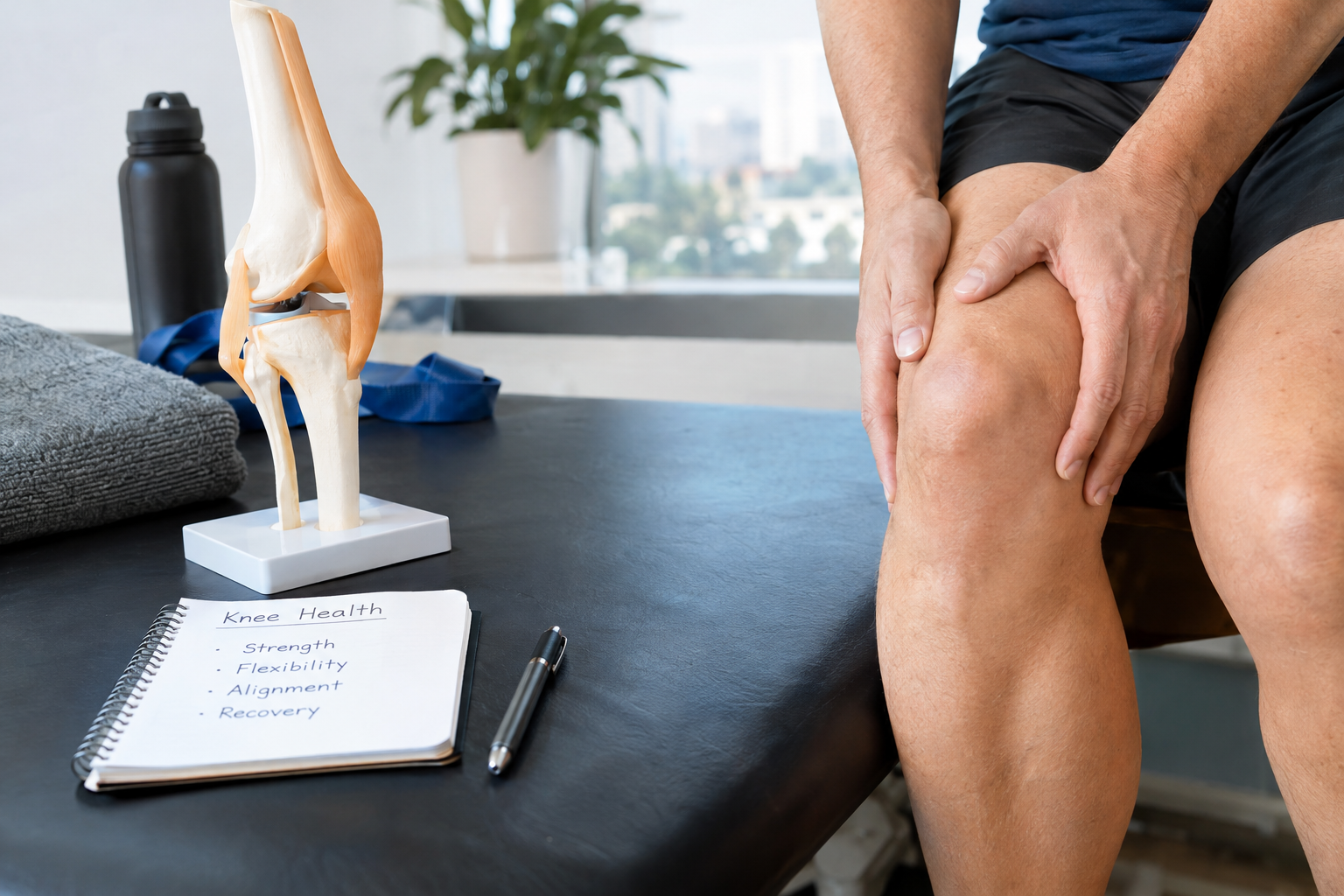
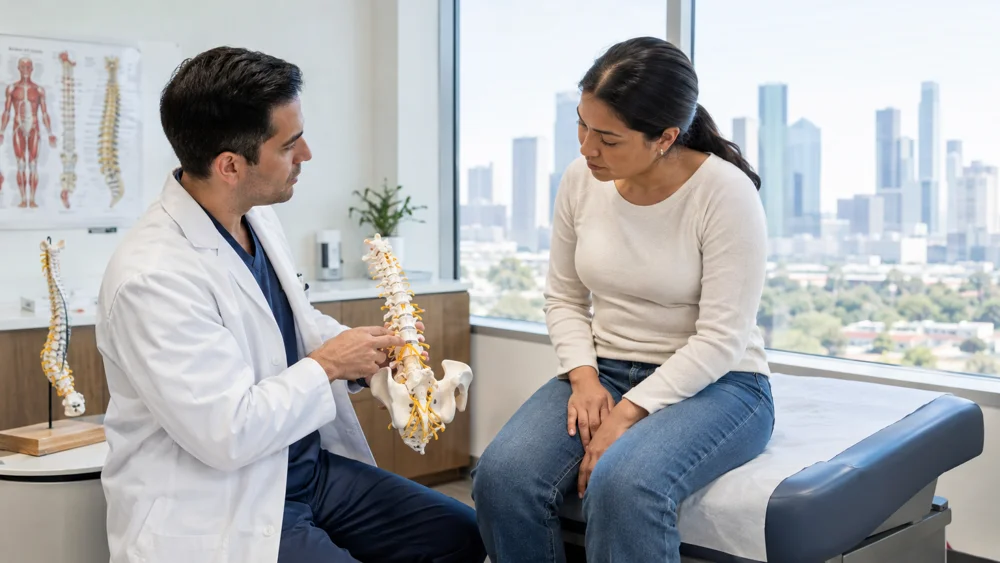
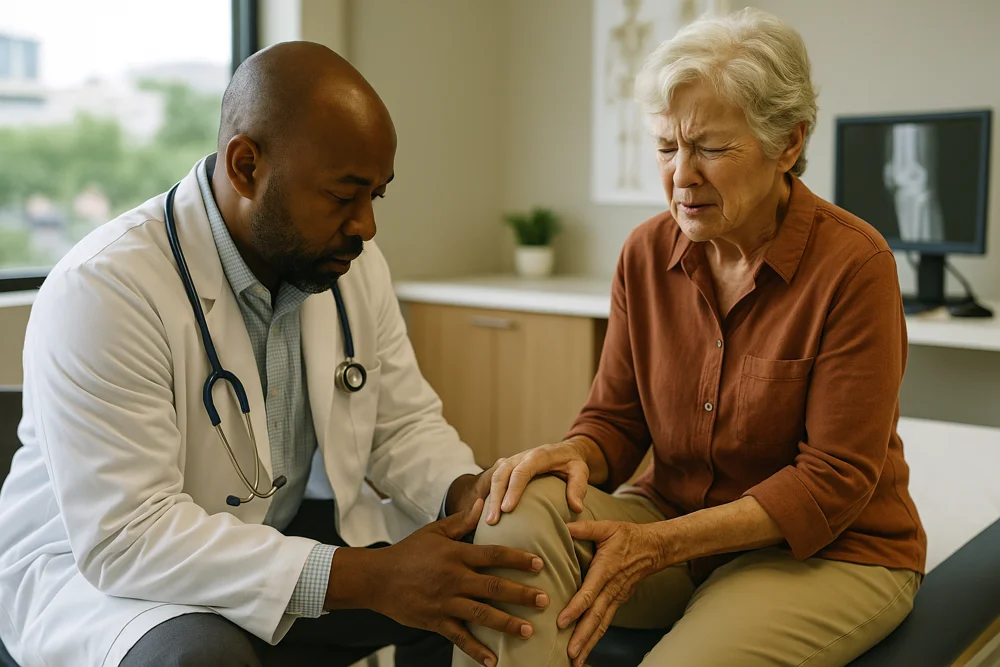
It can be frustrating when one knee hurts more than the other, especially if the discomfort seems to come out of nowhere. Some people notice pain only when walking up stairs, while others feel stiffness in one knee after sitting, exercising, or standing for long periods. In many cases, the reason is not mysterious at all. The body rarely moves in perfect symmetry, and small differences in strength, flexibility, alignment, prior strain, and daily habits can place more stress on one knee than the other.
For people searching for answers about one knee hurts more than the other Houston TX, it helps to understand that uneven knee pain can develop with or without a clear injury. Sometimes the cause is simple overuse. In other cases, it may be related to arthritis, tendon irritation, cartilage wear, gait imbalance, or referred pain from the hip or lower back. The key is identifying patterns, recognizing warning signs, and knowing when a non-surgical knee evaluation Houston may be appropriate.
This article explains common reasons one knee may hurt more than the other, what symptoms may suggest different causes, and when it is wise to seek medical attention. This is general educational information, not a personal diagnosis. If your pain is severe, persistent, or associated with swelling, instability, fever, or inability to bear weight, see a qualified clinician promptly.
Why uneven knee pain happens
Most people do not load both knees exactly the same way. One leg may be slightly stronger, one foot may roll inward more, or one hip may be tighter. Over time, those differences can change how force travels through the knee joint. Even a mild imbalance in posture, sports technique, job-related movement, or walking mechanics can lead to uneven knee pain causes Houston residents commonly experience.
Here are a few reasons asymmetrical pain is so common:
- Dominant leg use: You may push off, pivot, or step harder with one side.
- Prior minor injury: An old sprain or strain can change movement patterns long after the original pain fades.
- Muscle imbalance: Weak glutes, tight hamstrings, or poor quadriceps support can increase stress on one knee.
- Foot and ankle mechanics: Flat feet, high arches, or worn footwear may affect one side more than the other.
- Daily repetitive activity: Climbing stairs, kneeling, lifting, driving, or sports can overload one knee repeatedly.
Because the knee is part of a larger movement chain, the pain may not always start in the knee itself. The hip, pelvis, lower back, and foot can all influence how one knee functions.
Common causes when one knee hurts more than the other
1. Osteoarthritis and uneven joint wear
Osteoarthritis is one of the most common explanations for single-sided or uneven knee pain, especially in adults as they age. Cartilage naturally wears over time, but it does not always wear evenly. One knee may have more joint space narrowing, inflammation, or bony changes than the other.
Typical signs include:
- Stiffness after rest
- Aching with walking or standing
- Crunching or grinding sensations
- Pain that gradually worsens over months or years
- Swelling after activity
If single knee pain without injury Houston TX develops slowly and feels worse with weight-bearing, osteoarthritis may be one possibility to discuss during an evaluation.
2. Patellofemoral pain syndrome
This condition involves pain around or behind the kneecap and is often linked to tracking problems, overuse, muscle imbalance, or alignment issues. It may affect one knee more than the other if one side has weaker hip support or different mechanics during walking, running, squatting, or stair climbing.
Common symptoms include:
- Front-of-knee pain
- Discomfort going up or down stairs
- Pain after prolonged sitting
- Soreness with squatting or kneeling
This is a frequent cause of uneven pain in active adults and teenagers, even when no major injury occurred.
3. Tendon irritation or overuse
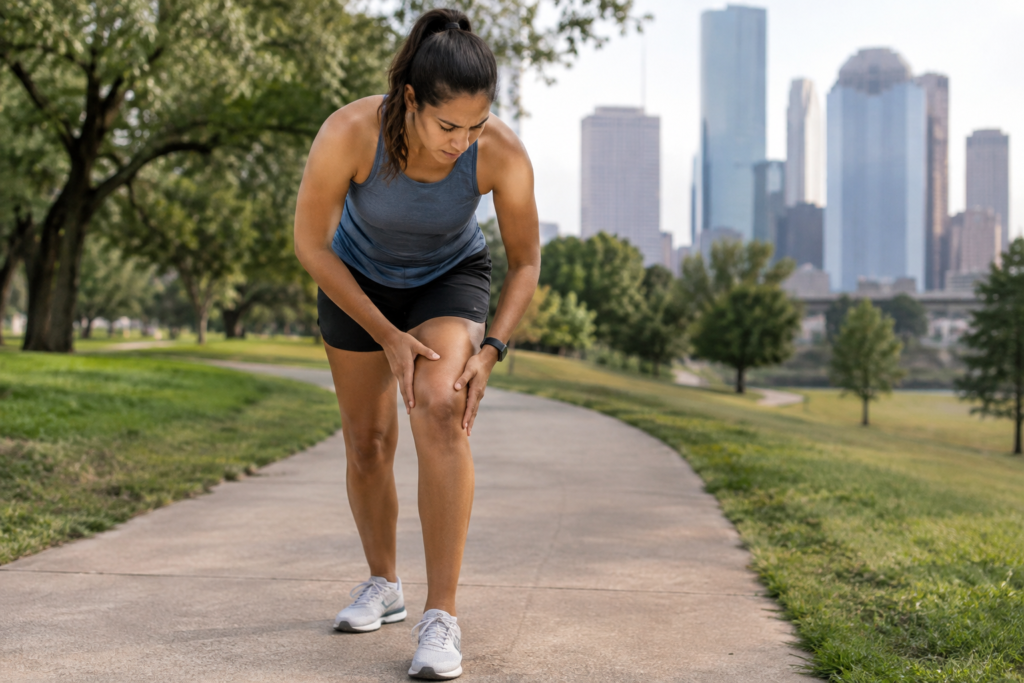
Tendons around the knee can become irritated from repeated stress. Patellar tendon pain often develops below the kneecap, while quadriceps tendon pain tends to be felt above it. Repetitive jumping, running, climbing, or sudden increases in activity can cause one-sided symptoms.
Overuse-related knee pain may be more likely if:
- You recently changed exercise intensity
- You stand for long shifts
- You do repetitive bending or lifting
- Your pain is worse during or after activity
When one side is doing more of the work, the discomfort often shows up there first.
4. Meniscus irritation or degeneration
The meniscus is cartilage that helps cushion and stabilize the knee. Meniscal problems do not always come from a dramatic injury. In some adults, the meniscus can fray or degenerate gradually, leading to pain in just one knee.
Symptoms may include:
- Pain along the inner or outer knee
- Clicking or catching
- Swelling
- Difficulty fully bending or straightening the knee
- Pain with twisting movements
Degenerative meniscal changes can overlap with arthritis, making proper evaluation important.
5. Bursitis
Bursae are small fluid-filled sacs that reduce friction around joints. When one becomes inflamed, it can cause localized knee pain, tenderness, and swelling. Kneeling for work, frequent pressure on the knee, or repetitive motion may trigger bursitis on one side.
The pain is often more pinpoint than deep joint pain. Some people also notice warmth or visible puffiness in a specific area.
6. Ligament strain or subtle instability
Not every ligament problem causes a dramatic collapse or sports injury. Mild sprains and chronic laxity can create pain, weakness, or a feeling that one knee is less reliable. If you unconsciously protect one side after a twist, awkward step, or old injury, that knee may continue to hurt more than the other.
Instability symptoms can include:
- Buckling or giving way
- Pain with pivoting
- Swelling after a misstep
- Lack of confidence on uneven ground
7. Alignment issues and gait differences
Structural alignment can influence how pressure moves across each knee. Bowed legs, knock knees, pelvic tilt, leg-length difference, and altered walking patterns can all create asymmetrical stress. Sometimes the difference is subtle enough that a person does not notice it until pain develops.
In these cases, the painful knee may not actually be the root problem. A clinician may look at posture, balance, footwear, range of motion, and how you walk to understand why one side is overloaded.
8. Referred pain from the hip or lower back
Not all knee pain starts in the knee. Nerves and movement dysfunction from the hip or lumbar spine can create pain felt mainly in one knee. Hip arthritis, pinched nerves, or muscular imbalance higher up the chain may change how you move and increase knee strain.
This may be more likely if you also have:
- Hip stiffness
- Buttock or groin pain
- Low back pain
- Numbness, tingling, or radiating symptoms
When the source is outside the knee, treating only the knee may not fully solve the issue.
9. Inflammatory conditions
Some inflammatory conditions can affect one knee early on, even if they later involve other joints. Examples include gout, pseudogout, rheumatoid arthritis, or other inflammatory joint disorders. These conditions can cause sudden swelling, warmth, and significant pain.
If one knee becomes hot, swollen, and very painful without an obvious reason, it is important to get medical attention rather than assume it is routine strain.
Symptoms that can help narrow the cause
While symptoms alone cannot confirm a diagnosis, the pattern of pain can offer useful clues.
| Symptom pattern | Possible considerations |
|---|---|
| Pain behind or around kneecap, worse with stairs or sitting | Patellofemoral pain, tracking or muscle imbalance |
| Inner or outer joint line pain with twisting or catching | Meniscus irritation or degeneration |
| Stiff, aching knee that worsens with activity and age | Osteoarthritis or cartilage wear |
| Pain below kneecap after running or jumping | Patellar tendon irritation |
| Localized tenderness with kneeling or pressure | Bursitis or soft tissue irritation |
| Buckling, giving way, or instability | Ligament strain, weakness, or neuromuscular control issue |
| Hot, swollen, suddenly painful knee | Inflammation, gout, infection, or urgent joint problem |
This kind of comparison can be helpful, but pain patterns often overlap. A professional evaluation is still the best way to identify the most likely cause.
What if there was no injury?
Many people are surprised by single knee pain without injury Houston TX because they assume pain must come from a fall, twist, or sports accident. In reality, gradual mechanical stress is extremely common. You might not remember any one moment that caused damage. Instead, pain may come from accumulated strain over weeks or months.
Examples include:
- Returning to exercise too quickly
- Long hours on your feet
- Repeated stair climbing
- Weight changes that increase joint load
- Muscle weakness after inactivity
- Compensating for foot, hip, or back discomfort
The absence of a major injury does not mean the pain should be ignored. Ongoing symptoms deserve attention, especially if they affect walking, sleep, work, or daily activities.
When to seek urgent medical attention
Some knee symptoms should not wait for a routine appointment. Seek urgent care promptly if you have:
- Inability to bear weight
- Severe swelling that appears quickly
- A visibly deformed joint
- Fever with a red, hot, swollen knee
- Sudden calf swelling or shortness of breath
- A locked knee that will not bend or straighten
- Significant pain after a fall or trauma
These signs can point to a fracture, serious ligament injury, infection, blood clot, or other condition needing prompt medical evaluation.
What a non-surgical knee evaluation may involve
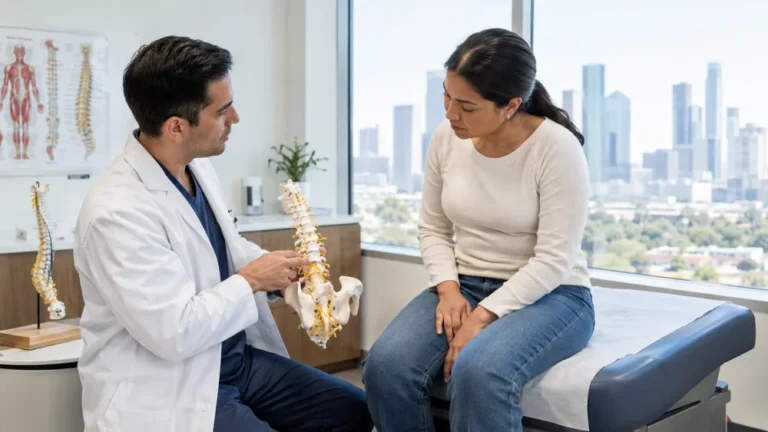
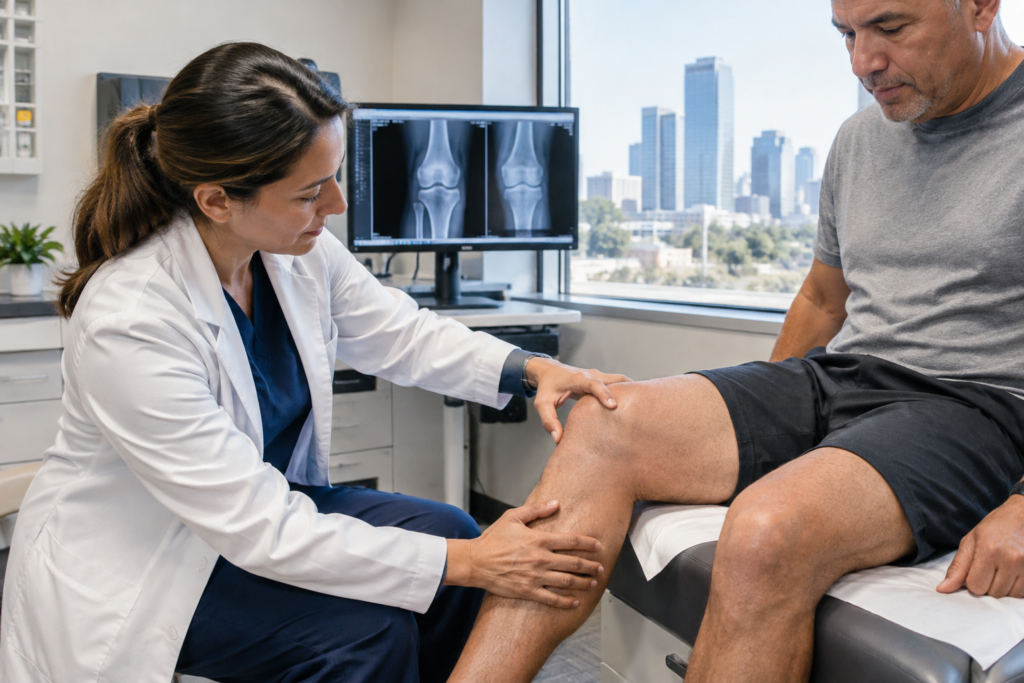
If symptoms keep returning or one knee consistently hurts more than the other, a non-surgical knee evaluation Houston visit can help clarify the source of the problem. A thorough evaluation generally focuses on identifying why the pain is happening, not just where it hurts.
A clinician may assess:
- Where the pain is located
- When it started and what makes it worse
- Swelling, warmth, or tenderness
- Range of motion
- Ligament stability
- Muscle strength and flexibility
- Walking mechanics and alignment
- Whether hip, foot, or back problems may be contributing
Depending on the history and exam, imaging such as X-rays or other testing may sometimes be considered to evaluate arthritis, structural issues, or internal derangement. Non-surgical care may then focus on the underlying mechanical or inflammatory cause, which can differ substantially from person to person.
Practical steps that may help while awaiting evaluation
For mild to moderate knee discomfort, conservative self-care may help reduce strain until you are seen by a clinician. These steps are general and not appropriate for every condition:
- Modify aggravating activity: Reduce repetitive stairs, deep squats, kneeling, or high-impact exercise if these worsen symptoms.
- Use relative rest, not complete immobilization: Gentle movement is often better than total inactivity unless you have been told otherwise.
- Apply ice after activity: This may help calm soreness and swelling.
- Check footwear: Worn-out or unsupportive shoes can contribute to uneven loading.
- Notice patterns: Track whether pain is worse in the morning, after sitting, during exercise, or after long workdays.
- Avoid pushing through instability: If the knee feels like it may buckle, do not force intense activity.
If pain persists beyond a short period, keeps recurring, or limits normal movement, self-care alone may not be enough.
Important considerations for active adults and older adults
For active adults
Exercise-related knee pain does not always mean you need to stop moving altogether, but it does mean your body may need a change in training load, form, recovery, or muscle support. Runners, gym-goers, recreational athletes, and people starting new fitness programs often develop one-sided pain from overuse and imbalance rather than a major injury.
Ignoring persistent pain can allow a minor issue to become a longer-term one. Early attention may help preserve activity and function.
For older adults
In older adults, one knee hurting more than the other is often linked to osteoarthritis, degenerative meniscal wear, reduced joint flexibility, and muscle weakness. Pain may come on gradually, and many people adapt their routine without realizing how much function they have lost.
Assessment can be especially helpful when pain affects balance, confidence walking, or independence with daily tasks.
Why the exact cause matters
Not all knee pain should be approached the same way. For example, pain from tendon irritation is different from pain caused by arthritis, bursitis, meniscal changes, or referred hip problems. That is why guessing based on internet searches can be misleading.
Accurate assessment matters because it helps determine:
- Whether the issue is likely inflammatory, mechanical, degenerative, or referred
- Whether imaging is necessary
- Which activities to limit or continue
- What type of non-surgical management may be appropriate
- Whether the symptoms suggest something more urgent
For people dealing with uneven knee pain causes Houston residents often describe as confusing or inconsistent, understanding the source can be the first step toward a safer and more effective plan.
Conclusion
If one knee hurts more than the other, the explanation is often related to how your body moves, how one side is being loaded, and whether there is underlying wear, irritation, inflammation, or instability. Common causes include osteoarthritis, patellofemoral pain, overuse, meniscus problems, bursitis, alignment differences, and referred pain from the hip or back. In many cases, especially with single knee pain without injury Houston TX, the problem develops gradually rather than from one obvious event.
Pay attention to how long the pain has been present, where it is located, what activities bring it on, and whether swelling, catching, or instability are involved. Mild symptoms sometimes improve with activity modification and supportive self-care, but persistent or worsening discomfort deserves a professional assessment. A thoughtful non-surgical knee evaluation Houston can help identify the likely cause, rule out urgent concerns, and guide next steps based on your individual symptoms and function.
Most importantly, do not ignore warning signs such as sudden severe swelling, inability to bear weight, a hot red knee, or major instability. General education can help you understand possibilities, but personal diagnosis and treatment decisions should always come from a qualified clinician.